Research Scientist Typography Tie Dye
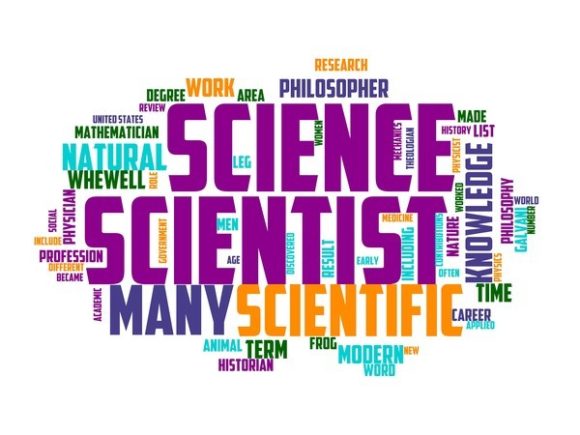
If you’ve ever struggled to make technical or academic content feel approachable—without sacrificing authenticity—Research Scientist Typography Tie Dye offers a refreshingly grounded solution. It’s not just another decorative font or clipart pack. This hand-drawn, colorful wordcloud merges scientific credibility with expressive visual warmth: think “peer-reviewed clarity” meets “studio-grade illustration.” Designed intentionally for real-world application, it bridges the gap between precision and personality—especially where communication needs to resonate emotionally while remaining intellectually honest.
Why this wordcloud works where others fall short
Most wordclouds prioritize density or algorithmic randomness. Research Scientist Typography Tie Dye flips that script. Each term is hand-placed, scaled for legibility, and balanced with breathing room—no overlapping, no forced cramming. The tie-dye color palette isn’t arbitrary; hues are carefully chosen for contrast, accessibility (meeting WCAG AA standards at normal viewing distances), and emotional resonance—calm blues for trust, warm ochres for curiosity, soft greens for growth. That means when you use it on a conference poster or a science outreach flyer, readers absorb meaning faster—not because it’s flashy, but because it’s structured intuitively.
Real applications, not hypotheticals
A university lab coordinator uses the wordcloud on reusable cotton tote bags for open-house events. Instead of listing “CRISPR,” “proteomics,” and “machine learning” in bullet points, they anchor those terms visually—each sized by relevance, each color-coded by research domain. Attendees remember the themes, not just the labels. Similarly, an environmental educator prints the design on 12” x 18” posters for classroom walls. Students don’t just read “biodiversity,” “carbon sequestration,” and “soil health”—they see how those ideas interconnect spatially and chromatically, reinforcing conceptual relationships without a single sentence of explanation.
Freelance designers integrate the wordcloud into branding kits for STEM startups. One client—a climate analytics platform—used it as a subtle background texture behind their logo on business cards and pitch decks. The effect? Instant visual alignment with mission-driven values, without leaning into clichéd “lab coat” or “DNA helix” tropes. Another small publisher embedded it into the endpapers of a popular science e-book, turning chapter summaries into immersive visual anchors—readers report higher retention of key concepts after flipping back to those pages during review.
Crafting with intention—not just decoration
This isn’t clipart you drop in and walk away from. Research Scientist Typography Tie Dye invites thoughtful layering. Try pairing it with clean sans-serif body text (like Inter or Lato) to create deliberate contrast between expressive headline energy and readable supporting information. For textile projects—say, screen-printed pillows or ceramic mugs—scale the wordcloud to fit natural focal points: centered on a pillow face, wrapped around a mug handle’s curve, or aligned to seam lines on tote bags. Its hand-drawn quality means slight imperfections translate beautifully to fabric and matte paper, avoiding the sterile “vector-perfection” that often feels cold on tactile surfaces.
When used in digital promotions—email headers, social banners, or webinar slides—reduce opacity slightly (to 85–90%) and overlay a light gradient mask. This preserves vibrancy while ensuring text placed atop remains legible. For printables like workshop handouts or curriculum guides, print on uncoated stock: the ink absorbs softly, enhancing the organic feel of the hand-drawn lines.
Who benefits most—and why
Educators designing inclusive STEM materials find immediate value: the wordcloud’s visual hierarchy supports neurodiverse learners who process spatial relationships more readily than linear lists. Small business owners in science-adjacent fields—like sustainable product labs, edtech tools, or wellness diagnostics—use it to signal expertise without jargon overload. Bloggers and science communicators repurpose individual words (extracted cleanly via vector editing) as custom social media icons or newsletter dividers—maintaining brand cohesion across platforms.
It’s especially effective for audiences fatigued by overdesigned “sciencey” visuals—think grant reviewers, policy advisors, or interdisciplinary collaborators. Here, Research Scientist Typography Tie Dye reads as both competent and human: evidence-based, yet warmly crafted. That duality builds trust faster than either pure minimalism or cartoonish illustration alone.
Practical considerations before you begin
Because it’s hand-drawn and layered, this wordcloud performs best at medium-to-large sizes (minimum 1200px wide for digital, 6” minimum dimension for print). At thumbnail scale—like app icons or tiny stickers—the fine line work and subtle color transitions may blur. If your project demands extreme scalability (e.g., billboard-sized murals or embroidery patterns), consider simplifying the layout first: isolate core terms, adjust spacing manually, or convert to high-res raster at final output size.
Also note: while the palette is accessible, always test contrast if placing over photos or textured backgrounds. A quick check in browser dev tools or using free contrast-checker plugins ensures readability for all users—not just aesthetic alignment. And if your project targets global audiences, verify term translations retain proportional weight. For example, “quantum computing” might shrink in Spanish (“computación cuántica”) due to character count—adjust manually to preserve emphasis.
More than decoration—it’s a communication tool
Unlike static graphics, Research Scientist Typography Tie Dye functions as a flexible framework. Use it as a starting point for co-creation: invite students to annotate printed versions with sticky notes, or ask team members to highlight which terms reflect current priorities versus aspirational goals. In scrapbooking or mixed-media journals, cut out individual words to build collages around personal research questions or teaching philosophies. On jewelry prototypes—like enamel pins or laser-cut wood pendants—the design translates crisply when simplified to bold outlines and flat fills.
For home décor, try heat-transfer vinyl on linen throw pillows or sublimation printing on ceramic coasters. The hand-drawn texture prevents the “mass-produced” look, giving handmade credibility even in batch production. And because it’s delivered as layered vector + high-res PNG, you retain full control: recolor a single term to match brand guidelines, remove low-priority words to focus messaging, or rotate clusters to suit vertical packaging layouts.
Final thought: Clarity starts with choice
Choosing Research Scientist Typography Tie Dye isn’t about picking “the prettiest” option—it’s selecting a tool calibrated for impact where substance and style must coexist. It saves time not by automating design, but by eliminating guesswork: no need to source disparate fonts, balance colors, or agonize over hierarchy. Its structure is already resolved. What remains is your insight—and how thoughtfully you apply it. Whether you’re launching a citizen science initiative, updating lab signage, or designing a conference program booklet, this wordcloud quietly elevates intentionality. Not with noise—but with nuance.