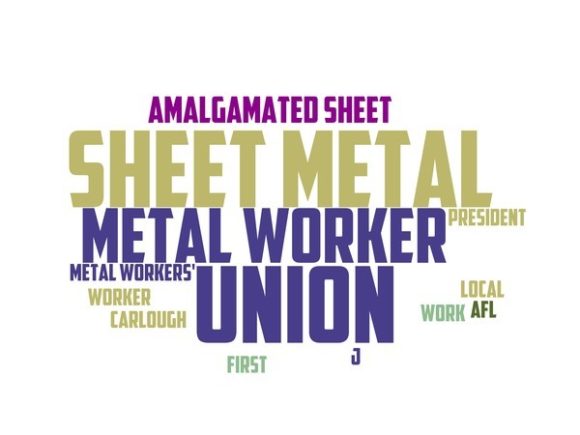
Sheet Metal Worker Typography Banner
A Sheet Metal Worker Typography Banner isn’t just a decorative phrase—it’s a focused, industry-specific typographic asset designed with intention. Unlike generic industrial fonts or overused construction-themed graphics, this banner combines authentic occupational language with deliberate visual structure. It reflects the precision, durability, and tactile nature of sheet metal work—think clean lines, bold weight contrast, subtle rivet-like accents, or metallic sheen textures rendered in vector form. Its value lies not in novelty alone, but in how effectively it communicates trade identity while remaining adaptable across physical and digital applications.
What Makes This Banner Stand Out?
At its core, the Sheet Metal Worker Typography Banner is built for clarity and context. The letterforms often echo fabrication tools: sharp terminals reminiscent of brake-formed edges, consistent stroke widths that suggest uniform gauge thickness, and spacing calibrated for legibility at both signage scale and small-format use (e.g., tool tags or safety labels). Many versions include optional elements—such as stylized tape measures, blueprints, or folded metal silhouettes—but these are integrated thoughtfully, never overwhelming the typography itself.
This restraint supports versatility. A banner used on a workshop wall poster doesn’t need to look identical when scaled down for a business card or embroidered onto a high-visibility vest. Because it’s typically delivered as a vector file (AI, EPS, SVG) or high-resolution PNG with transparent background, resizing maintains fidelity. That matters for professionals who juggle multiple output formats—whether printing vinyl decals for fleet vehicles or embedding assets into digital training modules.
Real-World Use Cases and Practical Performance
In practice, users report strongest performance in three areas: brand reinforcement, instructional clarity, and community signaling.
- Brand reinforcement: Contractors and trade schools use the Sheet Metal Worker Typography Banner to unify their visual language—on websites, proposal headers, and branded PPE. One HVAC contractor noted improved client recall after switching from generic “Contracting Services” banners to one featuring this specific typographic treatment; the shift signaled technical authority without requiring additional explanatory text.
- Instructional clarity: Instructors at technical colleges integrate the banner into lab signage and safety protocols. Its strong hierarchy and uncluttered composition help learners quickly identify zones (e.g., “Cutting Area,” “Weld Prep”) without visual competition from icons or dense paragraphs.
- Community signaling: At trade shows or union events, the banner functions as quiet professional shorthand. When printed on tote bags or lanyards, it signals affiliation and expertise more efficiently than full logos or slogans—especially useful for networking where first impressions happen in seconds.
That said, performance depends on implementation. Using the banner in low-contrast color combinations (e.g., light gray on white) undermines its strength in legibility. Similarly, stretching or skewing the vector files disrupts the intentional rhythm of the letterforms. Users who follow basic typographic best practices—consistent sizing, appropriate color contrast, and alignment with supporting imagery—see measurable gains in audience engagement and perceived professionalism.
Who Benefits Most—and When?
The Sheet Metal Worker Typography Banner serves a defined but diverse group: tradespeople launching independent businesses, educators developing curriculum materials, marketing coordinators supporting regional contractors’ associations, and designers creating cohesive branding systems for fabrication firms.
It’s especially valuable during transitional moments: rebranding after certification upgrades, launching apprenticeship programs, or preparing bid packages where differentiation matters. For example, a small-sheet-metal shop bidding on municipal infrastructure work used the banner as a header across all proposal sections—not as decoration, but as consistent visual punctuation reinforcing their specialization amid pages of technical specs.
Freelance designers also find it useful as a foundational element in larger kits. Paired with complementary icons (ductwork schematics, gauge charts, welding symbols), it forms part of a scalable design system rather than a standalone graphic. This reduces time spent building custom type treatments from scratch while preserving authenticity.
Quality and Consistency Considerations
Most reputable versions deliver consistent line weights, proper kerning between characters like “V” and “A” or “T” and “H”, and optical alignment that prevents visual “dropping” of letters at large sizes. These details aren’t cosmetic—they affect readability under real conditions: harsh workshop lighting, quick glances from moving vehicles, or glare on laminated posters.
Reliability hinges on source quality. Free downloads often lack true vector scalability or embed raster elements that pixelate. Verified commercial files—particularly those tested across CMYK and RGB workflows—maintain integrity whether printed on corrugated signage or displayed on mobile-responsive websites. Look for documentation confirming multi-format compatibility and embedded color profiles if color accuracy is mission-critical (e.g., for compliance signage).
Flexibility Beyond the Obvious
While the Sheet Metal Worker Typography Banner clearly fits trade contexts, its underlying design logic supports broader creative reuse. Designers repurpose its structural discipline for non-industrial projects—such as using its tight letter spacing and angular terminals as inspiration for tech startup branding, or adapting its monoline weight for minimalist packaging in hardware-adjacent markets (e.g., smart home installation kits).
Its adaptability extends to production methods: screen printing holds the sharp edges well; heat-transfer vinyl cuts cleanly; embroidery digitizers appreciate the predictable stroke density. Even laser engraving on metal tags benefits from the banner’s inherent tolerance for fine detail without fragility.
Limitations to Acknowledge
No typographic asset replaces strategic communication. The banner won’t clarify complex service offerings or substitute for accurate technical documentation. It also assumes audience familiarity—or willingness to learn—about sheet metal terminology. Using it on consumer-facing retail packaging without supporting visuals or plain-language explanations may confuse general audiences unfamiliar with terms like “gauge” or “seaming.”
Additionally, while many versions offer color variants, highly saturated palettes can limit accessibility. Always test contrast ratios against WCAG 2.1 guidelines if deploying publicly. And remember: licensing matters. Some bundles permit unlimited commercial use; others restrict resale in end products (e.g., pre-made mugs or apparel). Review license terms before integrating into merchandise workflows.
Ultimately, the Sheet Metal Worker Typography Banner earns its place not through flashiness, but through functional coherence. It respects the craft it represents while serving practical needs across print, digital, and physical media. For professionals who prioritize clarity, consistency, and contextual resonance over trend-driven aesthetics, it’s less of a “design choice” and more of a working tool—one that performs reliably when matched to the right project, audience, and execution standards.