Sculling Typography Print: A Hand-Drawn Word Cloud for Versatile Creative Applications
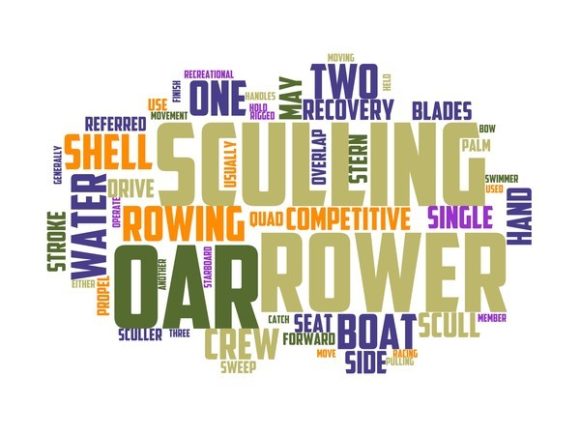
Sculling Typography Print stands out as a distinctive typographic asset—not a font, not a vector template, but a cohesive, hand-drawn word cloud built around thematic, inspirational language. Its value lies in its intentional imperfection: each word is carefully lettered by hand, then digitally arranged into a balanced, organic composition that avoids rigid symmetry while maintaining visual harmony. Unlike algorithmically generated word clouds, Sculling Typography Print offers curated vocabulary, consistent stylistic treatment, and deliberate color layering—making it function more like an illustrated typographic illustration than a data visualization tool.
What Sets Sculling Typography Print Apart
At its core, Sculling Typography Print is a high-resolution, layered PNG or EPS file (depending on the version purchased), designed with commercial use in mind. It features a central cluster of words—often aspirational or action-oriented terms like “create,” “explore,” “inspire,” “grow,” “craft,” and “connect”—rendered in varying weights, angles, and sizes, yet unified by shared line quality and color palette. The hand-drawn aesthetic includes subtle texture, slight ink bleed effects, and irregular baselines—all contributing to warmth and authenticity.
This isn’t clipart. It’s crafted with attention to negative space, rhythmic repetition, and chromatic balance. Colors are harmonized across light, medium, and deep tones—not overly saturated, but rich enough to reproduce well across print and digital formats. That consistency supports brand cohesion when used across multiple touchpoints, from packaging to social media assets.
Practical Use Across Mediums and Industries
Because Sculling Typography Print delivers clean, scalable files with transparent backgrounds, it integrates smoothly into diverse production workflows. Designers working in Adobe Illustrator or Affinity Designer can easily recolor individual word groups using global swatches. In Photoshop, layers allow selective adjustment of contrast, hue, or blending modes—useful when adapting the piece to dark apparel fabrics or matte paper stocks.
In textile design, its organic shape and moderate density translate well to screen-printed t-shirts, tote bags, and pillow covers—especially where a tactile, artisanal feel aligns with brand voice. For educators or wellness professionals, it serves effectively on workshop handouts or mindfulness posters without feeling generic. Small business owners have applied it successfully to café menu boards, boutique gift tags, and limited-run greeting cards—its handmade character reinforcing values like care, individuality, and intentionality.
It also performs reliably in mixed-media contexts. Collage artists incorporate fragments as background texture; scrapbookers use scaled-down versions as journal headers; indie publishers embed it in ebook chapter openers to reinforce thematic tone. Its flexibility extends to physical products: printed on ceramic mugs, it holds up under standard sublimation processes; on kraft paper packaging, the muted palette complements natural fibers without clashing.
Quality and Technical Considerations
Files are delivered at 300 DPI for print and include vector-compatible outlines where appropriate—though the hand-drawn nature means some fine detail (e.g., delicate cross-hatching or ink spatter) remains raster-based. This matters most for extreme enlargement: pushing beyond 24 inches wide may reveal pixelation in those textured elements unless working from the vector variant.
Color fidelity is consistent across CMYK and RGB profiles, but users should soft-proof before final press runs—particularly with deep teals or burnt oranges, which can shift slightly depending on substrate. The layered file structure supports easy isolation of color groups, allowing adaptation to brand guidelines without redrawing. However, modifying individual words—replacing “innovate” with “launch,” for example—requires manual re-lettering or careful masking; it’s not editable as live text.
Who Benefits Most—and When
Freelance designers building mood boards or pitch decks find Sculling Typography Print useful for conveying creative ethos quickly—its presence signals craftsmanship and narrative awareness without requiring explanation. Marketers launching lifestyle brands, especially in wellness, education, or sustainable goods, use it to reinforce messaging in banner ads or email headers where visual tone carries equal weight to copy.
Small batch producers—think ceramicists, candle makers, or stationery artisans—leverage it for cohesive product labeling. A single Sculling Typography Print file can serve across jar labels, thank-you cards, and Instagram story highlights, reducing design time while preserving visual continuity. Similarly, bloggers and course creators apply it to downloadable worksheets or slide decks, where its illustrative quality adds polish without distracting from content.
That said, it’s less suited for highly technical or corporate environments where neutrality, precision, or strict typography hierarchies dominate. A fintech SaaS dashboard or legal firm brochure would likely dilute its impact—or worse, create dissonance. Its strength is contextual: it works best where human-centered storytelling is part of the strategy.
Realistic Limitations and Workflow Fit
While versatile, Sculling Typography Print isn’t infinitely adaptable. Its fixed composition means it can’t be dynamically resized to fit arbitrary aspect ratios without cropping or distortion. Users needing modular components—say, separate “dream,” “do,” and “share” elements for independent placement—will need to extract and refine manually, which demands intermediate design skills.
Also, because it relies on hand-drawn nuance, scaling below 3 inches in width risks losing legibility in smaller words. For business cards or QR code stickers, focus on the largest 3–4 terms or use a simplified derivative rather than the full layout.
For teams using shared design systems, it functions best as a secondary asset—not a primary logo or core UI element—but one that adds expressive texture where appropriate. Its long-term value increases with reuse: once licensed, it can appear across seasonal campaigns, product drops, or community initiatives without additional fees, assuming the license permits multi-use (most standard licenses do).
Making It Work for Your Projects
Start by matching intent to application. If your goal is to evoke curiosity in a workshop flyer, place Sculling Typography Print near the headline—not as filler, but as visual reinforcement. For apparel, test it on fabric mockups first: its mid-tone density works well on heather grey or oatmeal cotton but may fade on pale yellow or charcoal.
When integrating into branding, treat it as a supporting voice—not the lead. Pair it with a clean sans-serif for body copy and a restrained color accent drawn from the word cloud itself. That approach maintains clarity while letting the illustration breathe.
Finally, consider audience perception. Research in visual communication shows that hand-drawn typography increases perceived approachability and trust—particularly among adults aged 30–50 evaluating products tied to personal growth or creativity. That resonance isn’t accidental; it’s built into the execution of Sculling Typography Print.
Used thoughtfully, it becomes more than decoration—it’s a quiet signal of values, a bridge between message and medium, and a practical tool that earns its place across iterations, formats, and years of use.