Shot Blaster Typography Book Cover: A Hand-Drawn Word Cloud for Versatile Creative Use
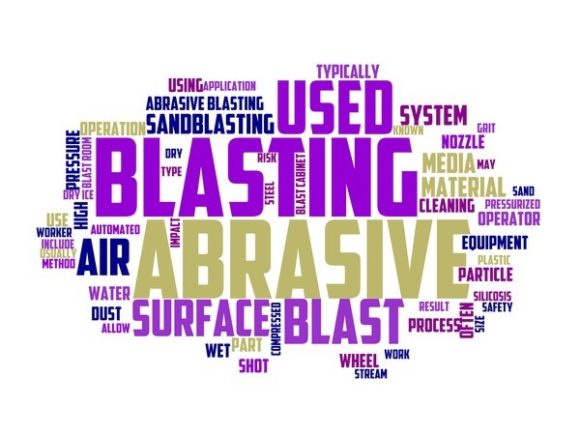
The Shot Blaster Typography Book Cover is not a conventional book cover in the traditional sense—it’s a meticulously hand-drawn, colorful word cloud designed as a flexible design asset. Unlike digitally generated or algorithmic word clouds, this version prioritizes organic line work, intentional spacing, and expressive typographic variation. Each word is rendered with subtle weight shifts, irregular baselines, and nuanced color transitions—qualities that emerge only from deliberate manual illustration. Its primary function is utility: it serves as a ready-to-use visual element across physical and digital product categories, from apparel and stationery to packaging and home décor.
What Sets It Apart From Other Typography-Based Design Assets
Most typography-focused design resources fall into one of three categories: font-based kits (which require typesetting skills), vector icon sets (often rigid in layout), or generative tools (which prioritize customization over craft). The Shot Blaster Typography Book Cover occupies a distinct middle ground—it delivers a finished, cohesive composition while retaining the warmth and imperfection of hand-drawn execution. That distinction matters when working on projects where authenticity and tactile appeal are priorities: think limited-run screen-printed tees, artisanal notebook covers, or boutique packaging where mass-produced symmetry feels out of place.
Unlike scalable font files, the Shot Blaster Typography Book Cover comes as a high-resolution raster or layered vector file—optimized for print clarity but intentionally resistant to heavy reformatting. You can’t easily swap out individual words or adjust kerning without compromising its hand-crafted integrity. That’s both a strength and a constraint: it excels when used as-is or with light cropping and recoloring, but it doesn’t support deep typographic editing like a font family would.
Practical Fit Across Common Creative Applications
Because the Shot Blaster Typography Book Cover was built with adaptability in mind, it performs well across diverse formats—provided expectations align with its design logic. For example:
- Clothing & textiles: Works especially well on natural-fiber garments (linen, organic cotton) where softer edges and muted color blends complement fabric texture. Avoid ultra-fine jersey or synthetic blends if printing full-coverage, as fine linework may blur at small scales.
- Stationery & paper goods: Scales cleanly down to 3×5 inches for greeting cards or tags, and holds up at poster size (24×36 inches) when printed on matte or uncoated stock. Its layered color palette avoids reliance on spot colors, simplifying CMYK or RGB output.
- Home décor & accessories: Appears balanced on throw pillows, ceramic mugs, and framed prints because the composition avoids strong directional emphasis—it reads equally well upright, rotated 90°, or cropped into circular motifs.
- Digital use: Functions reliably in e-book covers, social media banners, and presentation slides, though users should verify contrast ratios for accessibility compliance, particularly with lighter pastel text elements against soft backgrounds.
When It Fits—and When It Doesn’t
The Shot Blaster Typography Book Cover shines in contexts where thematic resonance matters more than semantic precision. Because the word cloud isn’t algorithmically weighted by frequency or data input, its value lies in mood, rhythm, and visual harmony—not information hierarchy. If your goal is to highlight specific keywords for SEO-driven marketing materials or data visualization, a custom-generated cloud with controlled sizing and placement may be more effective.
Similarly, it’s less suited for branding systems requiring strict consistency across touchpoints. While you can extract individual words or phrases for secondary applications, the original composition wasn’t engineered for modular reuse. A logo system built around this asset would need thoughtful adaptation—not direct extraction—to maintain cohesion.
Conversely, it’s highly effective for seasonal promotions, event invitations, or editorial features where spontaneity and warmth enhance messaging. A yoga studio launching a “Renewal” workshop series might use the Shot Blaster Typography Book Cover on tote bags and digital ads alike—the repetition of words like *breathe*, *ground*, *flow*, and *still* reinforces theme without needing literal interpretation.
Comparison With Alternative Approaches
Designers evaluating options often weigh the Shot Blaster Typography Book Cover against several alternatives:
- Custom hand-lettering commissions: Offer total control over wording, style, and scale—but carry higher cost, longer turnaround, and require clear creative direction. The Shot Blaster Typography Book Cover provides a professional-grade starting point at a fraction of the investment, ideal for time-sensitive launches or iterative prototyping.
- Font-based word clouds: Allow real-time editing and multilingual support but lack expressive variation in stroke, angle, or texture. They read as uniform—even when using variable fonts—whereas the Shot Blaster Typography Book Cover conveys human gesture through every curve and taper.
- AI-generated typography visuals: Can produce novel arrangements quickly but often struggle with legibility at small sizes, inconsistent letterform logic, or unintended cultural connotations in word placement. The Shot Blaster Typography Book Cover bypasses those risks by offering a vetted, human-curated composition.
Realistic Considerations for Production and Licensing
Licensing terms vary by vendor, but most versions of the Shot Blaster Typography Book Cover include extended commercial rights—covering physical products, digital distribution, and small-batch manufacturing. Always confirm whether resale rights apply to end products (e.g., selling printed notebooks on Etsy) versus internal use only (e.g., branded conference handouts). Some licenses restrict use in templates sold to third parties—a relevant detail for designers creating Canva or Adobe Express assets.
From a production standpoint, test prints are advisable before committing to large runs. Because the artwork relies on layered color interaction, screen-printing may require slight trapping adjustments; embroidery digitization will benefit from simplified outlines rather than attempting to replicate fine interior details. These aren’t limitations—they’re reminders that the Shot Blaster Typography Book Cover behaves like a crafted object, not a generic graphic.
Making an Informed Choice
Choosing the Shot Blaster Typography Book Cover ultimately depends on project goals, timeline, technical capacity, and aesthetic intent. It’s strongest when you value expressive typography as a finished component—not just a starting point—and when your workflow benefits from a cohesive, print-ready asset that requires minimal adjustment. It’s less optimal if your priority is granular linguistic control, strict brand scalability, or integration into automated design systems.
For educators designing classroom posters, indie publishers building distinctive book identities, or small studios developing signature merchandise lines, the Shot Blaster Typography Book Cover offers tangible advantages: speed without sacrificing character, versatility without genericism, and inspiration rooted in craft rather than computation. It doesn’t replace foundational typography knowledge—but it does extend it into spaces where intuition, color, and rhythm carry equal weight.